

-

 Instant Mushroom Coffee 25 in 1 – Keto Friendly Functional Mushrooms𝐏𝐎𝐖𝐄𝐑𝐅𝐔𝐋 𝟐𝟓-𝐈𝐍-𝟏 𝐌𝐔𝐒𝐇𝐑𝐎𝐎𝐌 𝐁𝐋𝐄𝐍𝐃: Discover the rich flavors of our medium roast mushroom coffee, featuring a unique blend of shiitake, lion’s mane, reishi, and chaga mushrooms. Expertly crafted for a smooth and enjoyable coffee experience with every cup. 𝐍𝐀𝐓𝐔𝐑𝐀𝐋 𝐄𝐍𝐄𝐑𝐆𝐘 𝐁𝐎𝐎𝐒𝐓: Enjoy a revitalizing...
- $24.95
-
- $24.95
- Unit price
- per
-
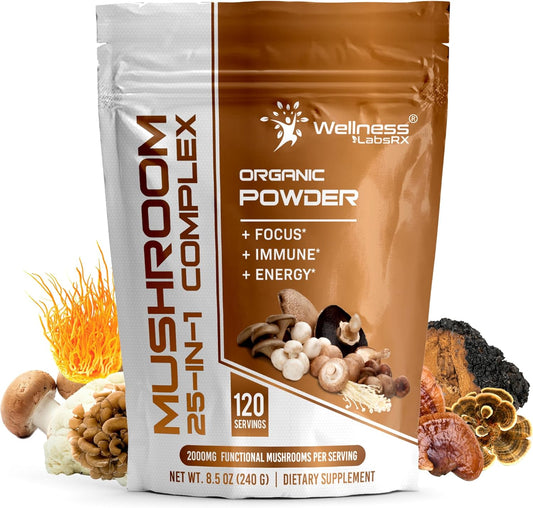
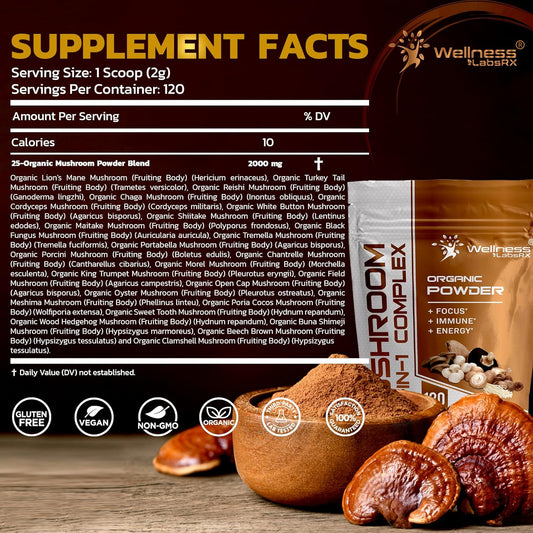 Mushroom Powder for Men and Women, Mushroom Supplement for Focus and Energy – 120 Servings𝐌𝐮𝐬𝐡𝐫𝐨𝐨𝐦 𝐁𝐥𝐞𝐧𝐝: Our 25-in-1 mushroom powder combines a variety of organic mushrooms, including Lion’s Mane, Reishi, Chaga, and Cordyceps. This blend is a versatile and nutrient-dense addition to your daily routine. 𝐍𝐚𝐭𝐮𝐫𝐚𝐥 𝐒𝐮𝐩𝐩𝐨𝐫𝐭: Rich in naturally occurring nutrients, this mushroom powder blend offers an...
- $24.95
-
- $24.95
- Unit price
- per
-

 Mushroom Hot Chocolate | Reishi Extract (Ganoderma)Enjoy a rich and comforting reishi mushroom hot chocolate made with cacao and Reishi extract (Ganoderma). This convenient mushroom cacao drink combines a smooth chocolate flavour with Reishi extract, making it an easy addition to your daily beverage routine. Mushroom Hot Cocoa for a Caffeine-Free...
- $29.95
-
- $29.95
- Unit price
- per
-

 Mushroom Hazelnut | Reishi Extract (Ganoderma)Instant Coffee Alternative for Restful Evenings: Unwind with a delicious, caffeine-free Hazelnut mushroom powder that nurtures relaxation and supports a peaceful bedtime routine. The perfect substitute for traditional coffee or tea without the crashes Reishi Mushroom 10:1 Extract: Potent Adaptogenic Blend: Each serving delivers...
- $29.95
-
- $29.95
- Unit price
- per
-

 Organic Sea Moss Gummies, Mixed Berry Flavor - 90 CountAll-Organic Nutrients: Wellness LabsRx Sea Moss Gummies are crafted with natural ingredients, offering a delightful mixed berry flavor that provides a convenient way to incorporate nutrients derived from sea moss into your daily routine. Daily Dose of Goodness: Take two gummies once a day,...
- $19.95
-
- $19.95
- Unit price
- per
-

 Bovine Colostrum Powder - Pure Bovine Colostrum for Humans - Grass Fed Colostrum SupplementFuel Your Wellness Journey: Wellness LabsRx Grass Fed Bovine Colostrum Powder delivers 2000mg of 60% IgG-rich organic colostrum per serving, a powerhouse superfood designed to support gut health, immunity, anti-aging properties, and radiant skin naturally Pure, Potent & Easy to Use: Sourced from first-milking...
- $24.95
-
- $24.95
- Unit price
- per
-

 Organic Bee Pollen 5g Per Serving – 90 Servings – 1 Lbs.𝐍𝐔𝐓𝐑𝐈𝐄𝐍𝐓-𝐑𝐈𝐂𝐇 𝐒𝐔𝐏𝐄𝐑𝐅𝐎𝐎𝐃: Elevate your nutrition with WellnessLabsRx organic bee pollen for women, a natural superfood packed with proteins, vitamins, and minerals. Harvested from the finest organic sources, our all natural bee pollen granules therapy are a wholesome addition to your daily diet with 2...
- $24.95
-
- $24.95
- Unit price
- per
-

 Keto Friendly Mushroom Coffee 7 in 1 with Superfood Mushrooms𝐃𝐀𝐑𝐊 𝐑𝐎𝐀𝐒𝐓 𝟏𝟎 𝐌𝐔𝐒𝐇𝐑𝐎𝐎𝐌𝐒 𝐁𝐋𝐄𝐍𝐃 Our instant mushroom coffee blend features a carefully crafted 10:1 extract ratio of mushrooms, including Lions Mane, Chaga, Reishi, Cordyceps, Maitake, Shiitake, and Turkey Tail, combined with a bold dark roast flavor. 𝐍𝐀𝐓𝐔𝐑𝐀𝐋 𝐄𝐍𝐄𝐑𝐆𝐘 Enjoy a naturally energizing cup...
- $24.95
-
- $24.95
- Unit price
- per
-

 Sea Moss Gel Wildcrafted Superfood All Natural Delicious Flavors – 10 OzSea Moss: Our sea moss gel is made from raw, Irish sea moss, ensuring exceptional quality and purity. Enjoy the benefits of nature with a product that’s free from artificial additives and preservatives. Caribbean Sourced: We proudly source our sea moss from the Caribbean...
- $24.95
-
- $24.95
- Unit price
- per
Close


Nattokinase Supplement Capsules For Men and Women – 120 Capsules
Heart Support: WellnessLabsRx presents Nattokinase Capsules with a potent 5000FU formula, derived from fermented soybeans. This supplement is designed to support optimal blood flow, offering a higher strength than standard nattokinase 2000FU and 4000FU formulations. Immune System Support: Each serving of our Nattokinase Supplement provides...
- $19.95
-
- $19.95
- Unit price
- per

Berberine Capsules Weight Loss Support – 60 Capsules
Berberine Capsules Weight Loss Support – 60 Capsules
- $19.95
-
- $19.95
- Unit price
- per


NAD Supplement Capsules for Men and Women with Resveratrol 1500mg - 90 Capsules
Cellular Wellness Made Simple: WellnessLabsRx NAD+ with Resveratrol Capsules combine NAD+ and resveratrol in a convenient daily supplement. Each serving provides 1500mg of the formulated blend, with 90 capsules per bottle for a 45-day supply when taking two capsules daily. Daily Energy and Wellness...
- $29.99
-
- $29.99
- Unit price
- per


Frequently Asked Questions
-
The immune system is not one thing — it's a complex network of cells, proteins, and signaling pathways that work in layers. Supplements support immunity through several distinct mechanisms: providing immune-modulating compounds like beta-glucans that prime immune cell activity, supplying minerals and growth factors that immune cells need to function, reducing chronic inflammation that suppresses immune response, and strengthening the gut barrier where most immune interactions occur. The best immune supplements don't "boost" immunity indiscriminately — they help maintain a calibrated, responsive immune system.
-
Medicinal mushrooms — Reishi, Turkey Tail, Lion's Mane, Chaga, Cordyceps, Shiitake, and others — contain beta-glucans, a class of polysaccharides specifically recognized by immune receptors on the surface of immune cells. When beta-glucans bind these receptors, they activate macrophages, natural killer cells, and dendritic cells — the frontline defenders of the immune system. This is not vague "immune support" — it's a specific, well-characterized molecular mechanism validated across decades of research.
-
Bovine Colostrum contains immunoglobulins — antibodies structurally similar to human IgG — that provide passive immune defense while also training the immune system to respond more efficiently. It contains lactoferrin, a protein with direct antiviral and antibacterial properties. Growth factors in Colostrum repair the gut lining, which is the primary site of immune surveillance. Unlike vitamin C or zinc, Colostrum actually supplies immune molecules the body can directly utilize. It's particularly valuable during periods of high stress, travel, or intense physical training.
-
Irish Sea Moss is rich in potassium, iodine, selenium, vitamin C, and antioxidant compounds — all essential for immune cell function. Selenium in particular is a critical cofactor for glutathione peroxidase, one of the body's primary antioxidant enzymes that protects immune cells from oxidative damage. Iodine supports thyroid function, which regulates metabolic rate and immune response speed. Sea Moss also acts as a prebiotic, feeding the gut microbiome that houses the majority of the immune system.
-
Urolithin A's immune contribution is indirect but significant — by activating mitophagy (clearing damaged mitochondria), it improves immune cell energy efficiency. Immune cells like neutrophils and macrophages require substantial ATP to mount an effective response. Dysfunctional mitochondria in aging immune cells reduce their capacity to respond quickly and effectively. By renewing the mitochondrial pool, Urolithin A helps maintain immune cell vigor, particularly relevant as immune function naturally declines with age.
-
Daily consistency yields the best results. Immune support is not an acute intervention — it's preventive infrastructure. Beta-glucans from mushrooms prime the immune system best when consistently present. Colostrum's gut-repairing effects require weeks of use to fully establish. Sea Moss minerals maintain optimal cofactor levels for immune enzyme function when supplemented regularly. Seasonal or crisis-only supplementation is less effective than building immune resilience year-round.
-
In most cases, yes — the supplements in this collection are food-derived compounds rather than pharmaceutical agents. However, Colostrum contains bioactive proteins and growth factors that can interact with some medications, and anyone on immunosuppressants should consult their physician before adding immune-modulating mushroom supplements. Always disclose all supplements to your healthcare provider when discussing medications.
-
This is an important distinction. Immune stimulation indiscriminately revs up immune activity — which can be counterproductive for people with autoimmune conditions. Immune modulation — what beta-glucans and adaptogens like Reishi provide — helps calibrate the immune response: activating it when needed and dampening it when overreactive. This makes mushroom-based immune supplements safer and more sophisticated than simple "boosters." Anyone with autoimmune conditions should consult their physician before using immune-active supplements.
-
Bee Pollen is one of the most nutrient-dense natural foods, containing proteins, vitamins, minerals, flavonoids, and polyphenols including quercetin and kaempferol — both known for their immune-modulating and anti-inflammatory properties. Research shows bee pollen has both antiviral and immunostimulatory properties through its flavonoid content. The Wellness LabsRx organic Bee Pollen Granules are a whole-food immune support addition with no synthetic processing.
-
Three criteria: ingredient integrity, dosing transparency, and third-party verification. For mushroom supplements specifically, ensure the product is made from fruiting bodies (not mycelium on grain), that beta-glucan content is disclosed, and that a COA from an ISO-accredited lab is available. For Colostrum, verify the immunoglobulin (IgG) percentage. All Wellness LabsRx immune support products meet GMP manufacturing standards and carry third-party testing documentation.
Recently Viewed Products
Example product title
- $19.99
-
- $19.99
- Unit price
- per
Example product title
- $19.99
-
- $19.99
- Unit price
- per
Example product title
- $19.99
-
- $19.99
- Unit price
- per
Example product title
- $19.99
-
- $19.99
- Unit price
- per
Example product title
- $19.99
-
- $19.99
- Unit price
- per
Example product title
- $19.99
-
- $19.99
- Unit price
- per
Example product title
- $19.99
-
- $19.99
- Unit price
- per
Example product title
- $19.99
-
- $19.99
- Unit price
- per
Example product title
- $19.99
-
- $19.99
- Unit price
- per
Example product title
- $19.99
-
- $19.99
- Unit price
- per
- Choosing a selection results in a full page refresh.