

-

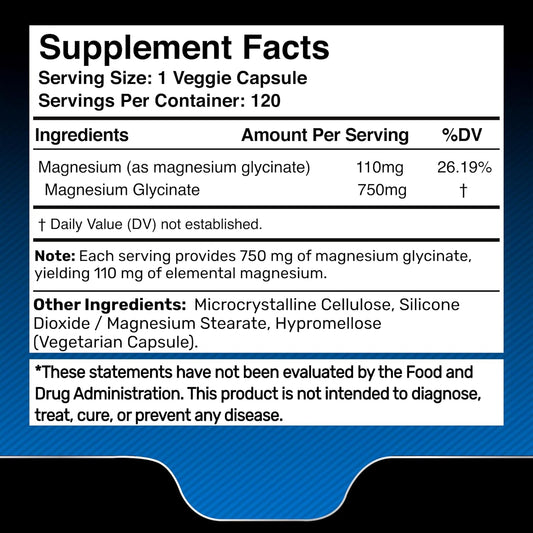 Magnesium Glycinate Capsules, Pure Complex, High Absorption Supplement - 120 CountBioavailable Magnesium Glycinate Capsules Our Magnesium Glycinate Capsules are carefully formulated to provide efficient magnesium absorption, supporting a balanced and healthy lifestyle. Gentle on the Stomach Designed to support easy digestion, these capsules are suitable for those with sensitive systems. Daily Wellness Support Each...
- $19.95
-
- $19.95
- Unit price
- per
-

 Creatine Gummies for Men and Women - 30 Servings𝐏𝐎𝐖𝐄𝐑𝐅𝐔𝐋 𝐂𝐑𝐄𝐀𝐓𝐈𝐍𝐄 𝐁𝐎𝐎𝐒𝐓 - Each serving delivers pure creatina monohidratada, the gold standard for muscle growth and strength enhancement. This 30-Day Supply maximize your workouts with superior support𝐀𝐂𝐂𝐄𝐋𝐄𝐑𝐀𝐓𝐄𝐃 𝐌𝐔𝐒𝐂𝐋𝐄 𝐆𝐑𝐎𝐖𝐓𝐇 & 𝐒𝐓𝐑𝐄𝐍𝐆𝐓𝐇 - Creatine monohydrate for women is scientifically proven to enhance muscle growth,...
- $24.95
-
- $24.95
- Unit price
- per
-

 Creatine Monohydrate Powder for Men and Women100% PURE CREATINE MONOHYDRATE POWDER: Premium creatine powder made with pure, micronized creatine monohydrate to support muscle strength, power, and high-intensity workout performance for men and women. SUPPORTS STRENGTH, POWER & LEAN MUSCLE: This creatine supplement, better than creatine hcl helps improve muscle energy...
- From $24.99
-
- From $24.99
- Unit price
- per
-

 Liquid Collagen with Biotin Drops, Vitamin B7 for Hair, Skin, Nails - Vanilla FlavorSupports Skin, Hair, and Nail Health: Crafted with collagen and liquid biotin, this supplement is designed to complement your daily wellness routine. The Tasty Vanilla Cream flavor makes it an enjoyable addition to your day. Convenient Daily Use: Take two droppers daily, mixed with...
- $19.95
-
- $19.95
- Unit price
- per
-

 Liposomal Astaxanthin Supplement Softgels - 120 CountULTRA STRENGTH 12MG ASTAXANTHIN: Sourced from Haematococcus Pluvialis microalgae, nature's richest natural source of astaxanthin, each softgel delivers a potent 12mg serving of pure liposomal astaxanthin organic, one of the most powerful antioxidants studied today. Known as the "King of Antioxidants," astaxanthin helps neutralize...
- $24.95
-
- $24.95
- Unit price
- per
Close


Nattokinase Supplement Capsules For Men and Women – 120 Capsules
Heart Support: WellnessLabsRx presents Nattokinase Capsules with a potent 5000FU formula, derived from fermented soybeans. This supplement is designed to support optimal blood flow, offering a higher strength than standard nattokinase 2000FU and 4000FU formulations. Immune System Support: Each serving of our Nattokinase Supplement provides...
- $19.95
-
- $19.95
- Unit price
- per

Berberine Capsules Weight Loss Support – 60 Capsules
Berberine Capsules Weight Loss Support – 60 Capsules
- $19.95
-
- $19.95
- Unit price
- per


NAD Supplement Capsules for Men and Women with Resveratrol 1500mg - 90 Capsules
Cellular Wellness Made Simple: WellnessLabsRx NAD+ with Resveratrol Capsules combine NAD+ and resveratrol in a convenient daily supplement. Each serving provides 1500mg of the formulated blend, with 90 capsules per bottle for a 45-day supply when taking two capsules daily. Daily Energy and Wellness...
- $29.99
-
- $29.99
- Unit price
- per


Frequently Asked Questions
-
Joint decline happens through several concurrent processes: cartilage degradation from reduced production of cartilage matrix components (glucosamine and collagen), loss of synovial fluid that lubricates joints, increased systemic inflammation that damages joint tissue, and declining muscle support around joints. Supplements address these mechanisms directly: Glucosamine provides the building blocks for cartilage synthesis, Collagen provides structural proteins, Magnesium supports muscle relaxation and connective tissue health, Quercetin reduces joint inflammation, and Creatine maintains the muscle strength that supports and protects joints.
-
The evidence is mixed but meaningfully positive for specific populations. A 2025 systematic review confirmed glucosamine sulfate produces small but significant reductions in knee osteoarthritis pain and stiffness, with good tolerability. Multiple European countries regulate it as a pharmaceutical drug based on its clinical evidence. The most consistent finding: Glucosamine works better for moderate-to-severe joint discomfort, requires 8–12 weeks of consistent daily use before benefits emerge, and is more effective when combined with chondroitin. Important: those with shellfish allergies should verify the source, as most Glucosamine is shellfish-derived.
-
Type II collagen is the specific form that makes up the majority of articular cartilage. As collagen production declines from age 25 onward (by approximately 1% per year), cartilage gradually loses its structural integrity. Supplementing with hydrolyzed collagen peptides provides glycine, proline, and hydroxyproline — the amino acids that chondrocytes (cartilage cells) use to synthesize new cartilage. A 2025 meta-analysis confirmed meaningful improvements in joint pain and flexibility from consistent collagen supplementation, with effects emerging at 8–12 weeks.
-
Magnesium is essential for muscle function and relaxation — and tight, poorly functioning muscles are a primary driver of joint stress and restricted mobility. When muscles don't relax properly (often due to magnesium deficiency), they pull joints out of alignment and generate excess pressure on cartilage surfaces. Magnesium also reduces systemic inflammation, acts as a co-factor in cartilage matrix synthesis, and supports the nerve function that enables precise motor control and movement quality.
-
Joints require strong surrounding muscles for stability and protection. Weak muscles equal unprotected joints. Creatine is the most evidence-backed supplement for maintaining and improving muscle strength — with 40 years of safety data. Stronger muscles absorb more impact before transmitting force to joint surfaces, reducing wear. For older adults particularly, creatine's muscle-preserving effects help counteract sarcopenia (age-related muscle loss) that leaves joints increasingly vulnerable.
-
Yes — this combination was originally studied partly for its joint applications. Bromelain is a natural anti-inflammatory with specific efficacy for joint swelling and tissue edema. Quercetin inhibits the same COX-2 enzymes targeted by NSAIDs, reducing prostaglandin-driven joint inflammation. Together, they address joint inflammation through both enzymatic and flavonoid pathways without the gastrointestinal side effects associated with regular NSAID use.
-
Astaxanthin's exceptional antioxidant activity — 6,000x more potent than Vitamin C — specifically neutralizes oxidative damage in joint tissue. Reactive oxygen species are produced during inflammation in joints and directly damage cartilage cells and synovial tissue. By quenching these free radicals, Astaxanthin helps protect the structural integrity of joint tissue and reduces oxidative-driven inflammation. It also reduces C-reactive protein (CRP) — a key inflammatory marker associated with joint disease progression.
-
Joint supplements work more slowly than systemic supplements — cartilage has poor blood supply and slow turnover. Glucosamine and Collagen: 8–12 weeks for meaningful improvement in most clinical trials. Magnesium: 2–4 weeks for improved muscle relaxation and reduced joint tension. Creatine: 2 weeks to saturate muscle stores and begin improving strength that supports joints. Quercetin with Bromelain: more immediate anti-inflammatory effects, with meaningful joint comfort improvement at 4–6 weeks.
-
Creatine is best taken post-workout for muscle recovery when combined with carbohydrates or protein. Quercetin with Bromelain can be taken with a meal at any time. Glucosamine and Collagen are generally taken with meals — Collagen is best absorbed with Vitamin C. Magnesium Glycinate for muscle relaxation is particularly effective in the evening when muscles are winding down after a day of movement.
-
Significantly. Low-impact daily movement (walking, swimming, cycling) maintains synovial fluid circulation that lubricates joint surfaces. Strength training builds the muscle protection that Creatine accelerates. Anti-inflammatory dietary patterns reduce the systemic inflammatory burden that damages joint tissue. Weight management reduces the mechanical load on joints — even small reductions in excess weight produce meaningful reductions in knee joint stress. Supplements work within this lifestyle context — not independently of it.
Recently Viewed Products
Example product title
- $19.99
-
- $19.99
- Unit price
- per
Example product title
- $19.99
-
- $19.99
- Unit price
- per
Example product title
- $19.99
-
- $19.99
- Unit price
- per
Example product title
- $19.99
-
- $19.99
- Unit price
- per
Example product title
- $19.99
-
- $19.99
- Unit price
- per
Example product title
- $19.99
-
- $19.99
- Unit price
- per
Example product title
- $19.99
-
- $19.99
- Unit price
- per
Example product title
- $19.99
-
- $19.99
- Unit price
- per
Example product title
- $19.99
-
- $19.99
- Unit price
- per
Example product title
- $19.99
-
- $19.99
- Unit price
- per
- Choosing a selection results in a full page refresh.