

-
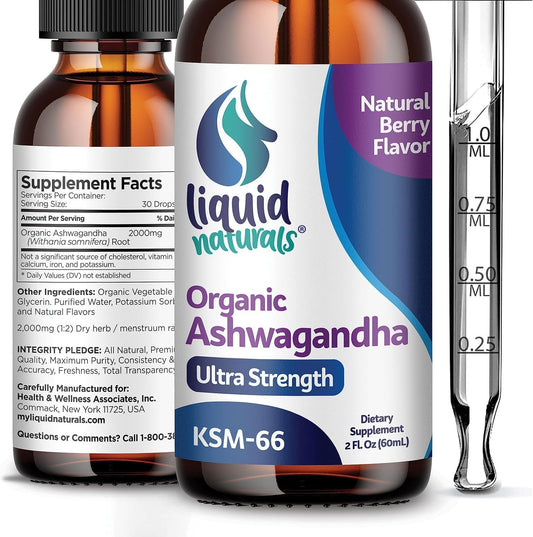
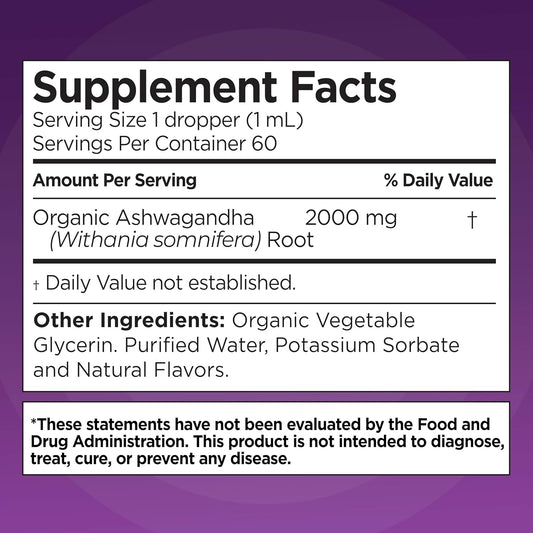 Organic Ashwagandha Liquid Drops 2000mg – Natural Berry Flavor – 2 ozAshwagandha Drops - Natural Berry Flavor
- $19.95
-
- $19.95
- Unit price
- per
-

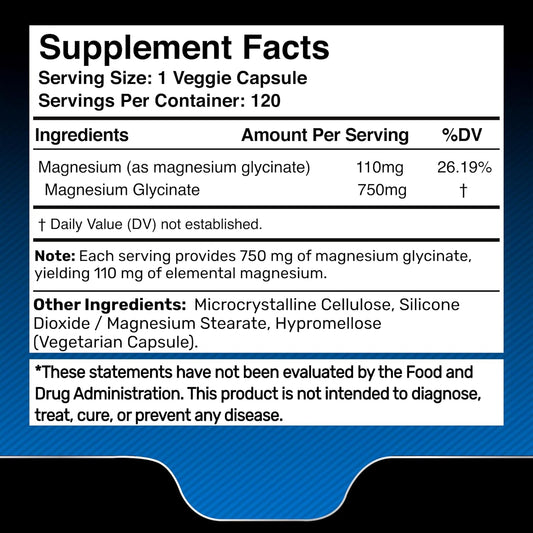 Magnesium Glycinate Capsules, Pure Complex, High Absorption Supplement - 120 CountBioavailable Magnesium Glycinate Capsules Our Magnesium Glycinate Capsules are carefully formulated to provide efficient magnesium absorption, supporting a balanced and healthy lifestyle. Gentle on the Stomach Designed to support easy digestion, these capsules are suitable for those with sensitive systems. Daily Wellness Support Each...
- $19.95
-
- $19.95
- Unit price
- per
-
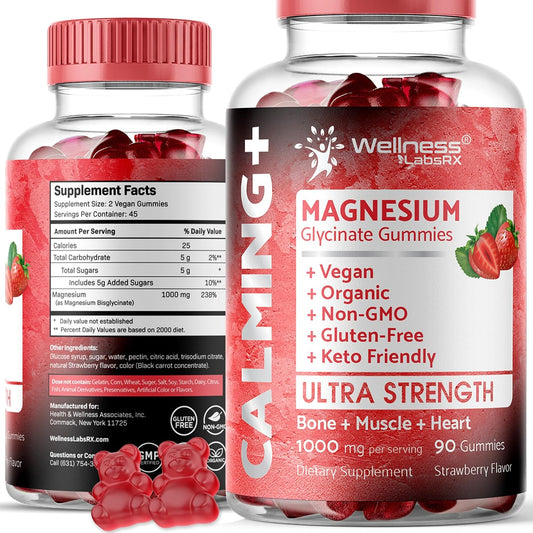
 Magnesium Glycinate Gummies for Men and Women - 90 CountWell-Being Boost: Support your wellness journey with our delicious Magnesium Gummies, featuring a unique formula that combines high-quality magnesium with natural flavors. With 90 gummies per bottle, you’ll have a 45-day supply to complement your daily routine. Science-Backed Formula: Our Magnesium Glycinate is known...
- $19.95
-
- $19.95
- Unit price
- per
-

 Lion's Mane Capsules for Men and Women, Mushroom Supplement for Focus and Immune - 120 CountCognitive Support: WellnessLabsRx Lion's Mane Capsules are crafted to complement your wellness routine. Each serving provides 1500mg of Lion’s Mane mushroom, traditionally valued for its potential to support memory and focus. With 120 capsules per bottle, enjoy a convenient 60-day supply. Nutrient-Rich Formula: Known...
- $19.95
-
- $19.95
- Unit price
- per
-

 Instant Mushroom Coffee 25 in 1 – Keto Friendly Functional Mushrooms𝐏𝐎𝐖𝐄𝐑𝐅𝐔𝐋 𝟐𝟓-𝐈𝐍-𝟏 𝐌𝐔𝐒𝐇𝐑𝐎𝐎𝐌 𝐁𝐋𝐄𝐍𝐃: Discover the rich flavors of our medium roast mushroom coffee, featuring a unique blend of shiitake, lion’s mane, reishi, and chaga mushrooms. Expertly crafted for a smooth and enjoyable coffee experience with every cup. 𝐍𝐀𝐓𝐔𝐑𝐀𝐋 𝐄𝐍𝐄𝐑𝐆𝐘 𝐁𝐎𝐎𝐒𝐓: Enjoy a revitalizing...
- $24.95
-
- $24.95
- Unit price
- per
-

 Mushroom Hot Chocolate | Reishi Extract (Ganoderma)Enjoy a rich and comforting reishi mushroom hot chocolate made with cacao and Reishi extract (Ganoderma). This convenient mushroom cacao drink combines a smooth chocolate flavour with Reishi extract, making it an easy addition to your daily beverage routine. Mushroom Hot Cocoa for a Caffeine-Free...
- $29.95
-
- $29.95
- Unit price
- per
-

 Mushroom Hazelnut | Reishi Extract (Ganoderma)Instant Coffee Alternative for Restful Evenings: Unwind with a delicious, caffeine-free Hazelnut mushroom powder that nurtures relaxation and supports a peaceful bedtime routine. The perfect substitute for traditional coffee or tea without the crashes Reishi Mushroom 10:1 Extract: Potent Adaptogenic Blend: Each serving delivers...
- $29.95
-
- $29.95
- Unit price
- per
-

 NAD Supplement Capsules for Men and Women with Resveratrol 1500mg - 90 CapsulesCellular Wellness Made Simple: WellnessLabsRx NAD+ with Resveratrol Capsules combine NAD+ and resveratrol in a convenient daily supplement. Each serving provides 1500mg of the formulated blend, with 90 capsules per bottle for a 45-day supply when taking two capsules daily. Daily Energy and Wellness...
- $29.99
-
- $29.99
- Unit price
- per
-

 Keto Friendly Mushroom Coffee 7 in 1 with Superfood Mushrooms𝐃𝐀𝐑𝐊 𝐑𝐎𝐀𝐒𝐓 𝟏𝟎 𝐌𝐔𝐒𝐇𝐑𝐎𝐎𝐌𝐒 𝐁𝐋𝐄𝐍𝐃 Our instant mushroom coffee blend features a carefully crafted 10:1 extract ratio of mushrooms, including Lions Mane, Chaga, Reishi, Cordyceps, Maitake, Shiitake, and Turkey Tail, combined with a bold dark roast flavor. 𝐍𝐀𝐓𝐔𝐑𝐀𝐋 𝐄𝐍𝐄𝐑𝐆𝐘 Enjoy a naturally energizing cup...
- $24.95
-
- $24.95
- Unit price
- per
-
 Energy Support Capsules For Men and WomenEnergy Support Capsules For Men and Women
- $19.95
-
- $19.95
- Unit price
- per
Close


Nattokinase Supplement Capsules For Men and Women – 120 Capsules
Heart Support: WellnessLabsRx presents Nattokinase Capsules with a potent 5000FU formula, derived from fermented soybeans. This supplement is designed to support optimal blood flow, offering a higher strength than standard nattokinase 2000FU and 4000FU formulations. Immune System Support: Each serving of our Nattokinase Supplement provides...
- $19.95
-
- $19.95
- Unit price
- per

Berberine Capsules Weight Loss Support – 60 Capsules
Berberine Capsules Weight Loss Support – 60 Capsules
- $19.95
-
- $19.95
- Unit price
- per


NAD Supplement Capsules for Men and Women with Resveratrol 1500mg - 90 Capsules
Cellular Wellness Made Simple: WellnessLabsRx NAD+ with Resveratrol Capsules combine NAD+ and resveratrol in a convenient daily supplement. Each serving provides 1500mg of the formulated blend, with 90 capsules per bottle for a 45-day supply when taking two capsules daily. Daily Energy and Wellness...
- $29.99
-
- $29.99
- Unit price
- per


Frequently Asked Questions
-
They operate through fundamentally different mechanisms and at different scales of intervention. Prescription medications alter neurotransmitter levels or receptor sensitivity and are appropriate for clinical anxiety and depression — always under physician supervision. Stress supplements like Magnesium Glycinate, Ashwagandha, and adaptogenic mushrooms work through physiological pathways: regulating the HPA axis (your body's stress response system), restoring cortisol balance, replenishing magnesium that stress depletes, and supporting GABA activity. They are supportive tools for everyday stress management — not replacements for professional mental health care when that's needed.
-
There are many forms of magnesium, but Glycinate specifically pairs magnesium with the amino acid glycine. Both are involved in GABA regulation — the primary inhibitory neurotransmitter that creates feelings of calm. Glycine also directly supports serotonin production. Magnesium regulates the HPA axis, reducing cortisol output during stress. A 2024 review in Nutrients found that magnesium supplementation significantly reduced mild-to-moderate anxiety and improved sleep quality. Critically, chronic stress depletes magnesium — meaning stress itself creates a deficiency that worsens your stress response in a self-reinforcing cycle.
-
Ashwagandha (Withania somnifera) is one of the most studied adaptogens in the world. Its active compounds — withanolides — modulate the body's cortisol response at the HPA axis level. A 2022 meta-analysis published in Journal of Ethnopharmacology confirmed that Ashwagandha supplementation significantly reduced cortisol levels and improved perceived stress. The NIH's Office of Dietary Supplements provisionally recommends 300–600mg of standardized Ashwagandha root extract for stress and anxiety support — a dose validated in multiple human trials. It also supports sleep quality, making it valuable for the stress-sleep cycle many people struggle to break.
-
Reishi mushroom has been called "the mushroom of immortality" in traditional Chinese medicine for thousands of years — its modern pharmacological profile confirms significant adaptogenic, anxiolytic, and neuroprotective properties. Ganoderic acids in Reishi modulate the stress response and support a calmer nervous system state. The Mushroom Coffee and Mushroom Complex blends in this collection deliver Reishi alongside Lion's Mane and other adaptogens, creating a compound effect: Lion's Mane supports NGF and mood, while Reishi buffers the physiological stress response at the hormonal level.
-
Shilajit is classified as an adaptogen and Ayurvedic rasayana — meaning it helps the body maintain equilibrium under stress. Its fulvic acid content supports neurotransmitter production by improving cellular nutrient uptake. Shilajit also lowers cortisol by improving mitochondrial function — giving cells the energy they need to handle stress without triggering a survival-level hormonal response. Many users report improved sense of vitality and emotional resilience within a few weeks of daily use.
-
Magnesium Glycinate is most effective taken in the evening — glycine has calming effects that support sleep, and cortisol naturally peaks in the morning, not at night. Ashwagandha can be taken morning or evening depending on your goal: morning use supports daytime stress resilience, evening use supports sleep and cortisol reduction. Mushroom Coffee is naturally consumed in the morning as a daily ritual. Shilajit can be taken at any time. If combining multiple supplements, stagger doses rather than taking everything at once.
-
Magnesium Glycinate often produces mild calming and improved sleep within the first 1–2 weeks. Ashwagandha's cortisol-lowering effects become measurable in most studies at 4–8 weeks of daily use. Adaptogenic mushroom effects build over 4–6 weeks of consistent use. Shilajit users often notice energy-adjacent mood improvements within 2–3 weeks. None of these work overnight — consistency matters far more than acute dosing for sustainable mood and stress outcomes.
-
Yes — and Mushroom Coffee is specifically designed for exactly this. The adaptogens in Reishi and other mushrooms help buffer some of the cortisol-spiking effects of caffeine, making Mushroom Coffee a smarter option than plain coffee for those prone to coffee-triggered anxiety or afternoon crashes. If you're taking Magnesium Glycinate or Ashwagandha alongside regular coffee, timing matters: Ashwagandha midday and Magnesium at night works well for most people.
-
The supplements in this collection support everyday stress management and mood stability for generally healthy adults. They are not treatments for clinical depression, generalized anxiety disorder, or other diagnosed mental health conditions. If you are experiencing persistent, significant mood symptoms, please speak with a qualified healthcare professional. These supplements may complement — but should not replace — appropriate medical or psychological care.
-
Ashwagandha may interact with thyroid medications, sedatives, and immunosuppressants — disclose its use to your physician if you take any of these. Magnesium can reduce absorption of certain antibiotics and interact with medications for blood pressure and diabetes. Always inform your healthcare provider of all supplements in use, particularly if you are on prescription medications for mental health, thyroid, or cardiovascular conditions.
Recently Viewed Products
Example product title
- $19.99
-
- $19.99
- Unit price
- per
Example product title
- $19.99
-
- $19.99
- Unit price
- per
Example product title
- $19.99
-
- $19.99
- Unit price
- per
Example product title
- $19.99
-
- $19.99
- Unit price
- per
Example product title
- $19.99
-
- $19.99
- Unit price
- per
Example product title
- $19.99
-
- $19.99
- Unit price
- per
Example product title
- $19.99
-
- $19.99
- Unit price
- per
Example product title
- $19.99
-
- $19.99
- Unit price
- per
Example product title
- $19.99
-
- $19.99
- Unit price
- per
Example product title
- $19.99
-
- $19.99
- Unit price
- per
- Choosing a selection results in a full page refresh.